
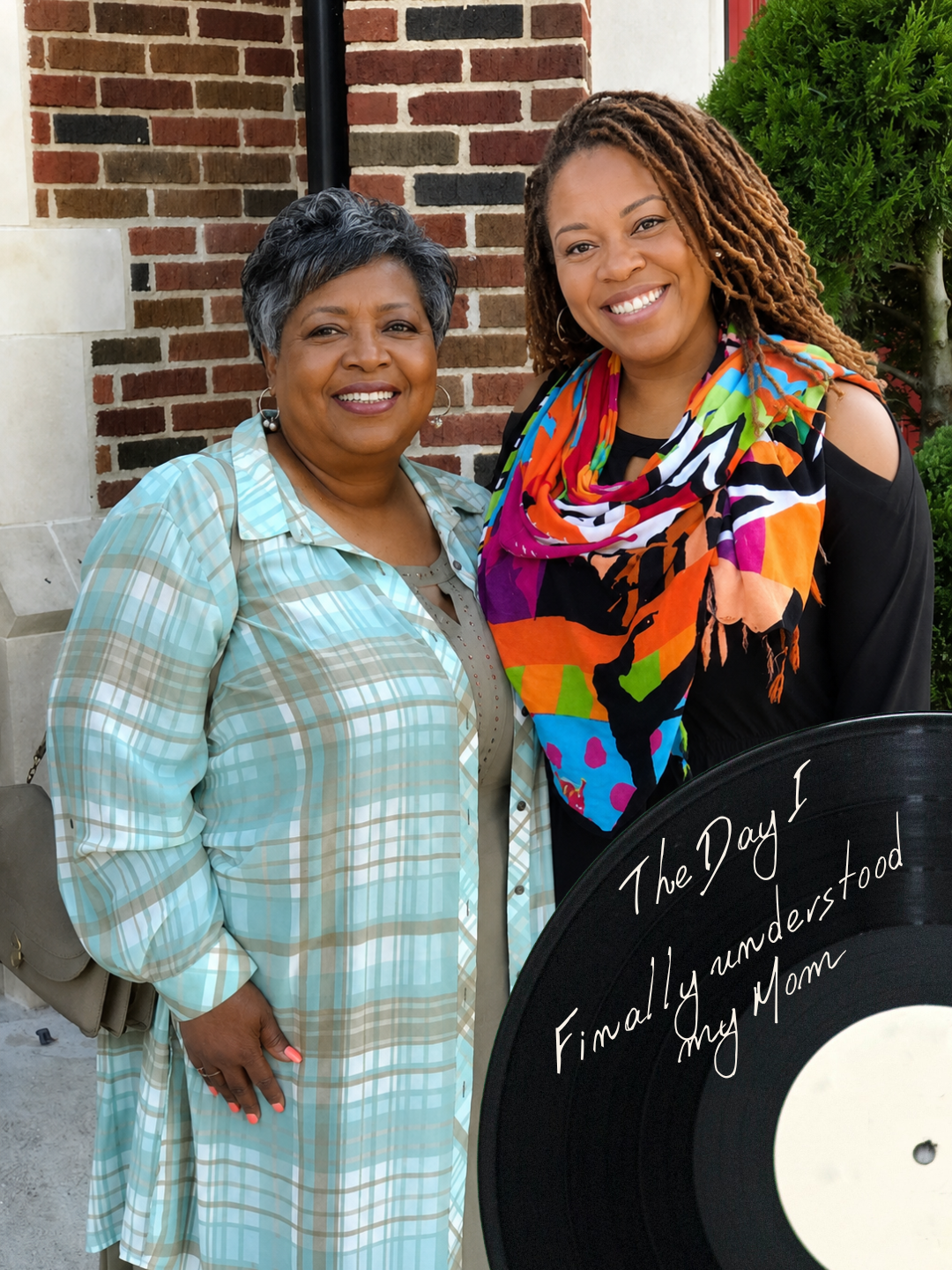
The day I finally understood my mother.
I remember being trapped in the car with my mom after an hour-long practice when she asked me if I knew what oral sex was.
She had heard that teenagers were engaging in it and wanted to make sure I understood that it was not of God and still considered sex.
I was horrified.
Not because I was doing it, but because whenever conversations about sex began with God and shame, it never felt safe to ask honest questions. So I didn’t ask my mom anything. Instead, I walked across the street to the health clinic next to my high school and picked up pamphlets explaining what oral sex was, the risks, and everything else I wanted to know.
Looking back, that became a pattern throughout my life.
Whenever I couldn’t find answers at home, I searched for them myself. Sometimes through a health clinic. Other times through books, life experiences, or hard knocks. My curiosity never left me.
Like so many people, I’ve spent years unlearning childhood experiences. Some big, some small.
As a child, I was often told to be seen and not heard. What I took from that wasn’t simply to be quiet. I learned to shrink myself. The funny thing is, even shrinking wasn’t enough to stop me from asking questions.
I’ve always been inquisitive. I’ve always questioned things and explored ideas outside of my family’s traditions and the church. It often felt like every conversation somehow centered God……this almighty being who condemned everything outside of traditional marriage and children.
Ironically, I don’t even want children, and for a long time, husbands seemed like a pain too.
That made me feel like the oddball.
I remember reading somewhere that children have the gift of imagination. As a little girl, I used to whisper to myself, “Never forget your childlike imagination.” Dreaming carried me. I could always visualize a different future for myself, even if I couldn’t explain it to anyone else.
As I grew older, I became “the troublemaker.” The child who was always into something. Looking back, I don’t think I wanted trouble. I wanted freedom. I didn’t care about being perfect; I just wanted to be myself.
Unfortunately, that version of me didn’t always fit into the box my mom hoped I would. For years, I believed I wasn’t my mother’s favorite because of it, and I resented her.
Fast forward twenty years.
I’ve taken on documenting my family’s history, and it’s become one of the most emotional journeys of my life. You begin by learning about relatives you’ve never met, but somewhere along the way, you realize you never truly knew the people you thought you did either.
On my mother’s birthday, I sat in my parents’ living room looking through old photo albums from the late ’60s through the ’80s. I’d seen many of those albums growing up, but this time was different.
I saw my mom in middle school. Polished, serious, and so cute. Then I saw her in high school. Pretty. Reserved. Smart. On student council. Winning academic awards. A debutante. I found sweet letters from boys who clearly adored her. Then there were pictures of her at Webster College in St. Louis. Then her wedding day in my grandparents’ backyard.
And suddenly, a light bulb went off.
For the first time in my life, I wasn’t looking at my mother.
I was looking at a young woman.
The photographs couldn’t tell me everything. They couldn’t show me the private struggles she carried. They couldn’t show me what it felt like to be raised by my grandmother, who had her as a teenager before moving north in search of a better life. They couldn’t show me how heartbreaking it was to leave college before finishing because she was trying to do everything alone.
Alone.
That word stayed with me because I’ve felt it too.
Being the first to do many of the things I’ve done has often felt lonely.
As I learned more about my mother’s life, I realized something that completely changed the way I saw her.
For years, I viewed her as “Perfect Patty.” A Christian woman who followed the Bible without question. Someone who stayed inside the lines.
But looking through those photographs and hearing the stories behind them showed me something different.
My mom was more than that.
She had once pushed against the limits of what was expected of her. She left home for college. She dreamed of becoming a teacher. She wanted a different life than the one she inherited. She was a trailblazer in her own family.
She simply reached the edge of what she could accomplish alone.
Don’t we all?
Every generation pushes a little farther than the one before it.
My grandmother broke barriers so my mother could push farther. My mother pushed farther so I could push farther still. Each generation inherits both the sacrifices and the unfinished work of the generation before it.
When I asked my mom why she never talked about her accomplishments, she simply said she didn’t think she should brag or make a big deal out of them.
That answer stayed with me.
Not because she lacked accomplishments, but because she genuinely didn’t see them as extraordinary. She had simply lived her life the best way she knew how.
Today, I’m proud of my mom.
Not because I suddenly think she got everything right.
She didn’t.
Neither will I.
I’m proud because I finally understand her.
We’re different people, and I think that’s exactly how it’s supposed to be. I’m the version of my mother who had the privilege to push a little farther because she sacrificed and gave me opportunities she didn’t always have herself.
Healing is a long journey.
One of the hardest things I’ve had to do was let go of needing my mother to love me in a very specific way before I could truly see her. Understanding her doesn’t erase my childhood experiences, nor does it excuse every hurt. It simply gives those experiences context.
Today, when I look at my mom, I don’t just see my mother.
I see someone’s daughter.
A young woman with dreams.
A woman trying to push beyond the limits of her own generation.
And because she did, I get to push a little farther in mine.
For that, I’ll always be grateful.