
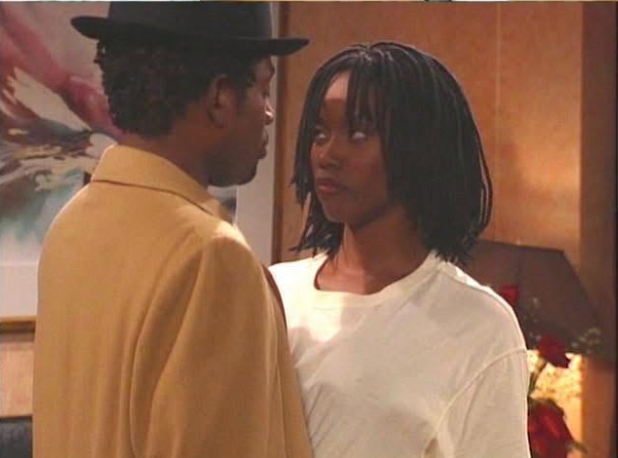
Before you call it a relationship, somebody’s auntie has probably already made him a plate.
It’s a special kind of embarrassment, realizing your auntie has been clocking you falling in love while you were still pretending nothing was happening.
You thought you were just minding your business, or at least doing a decent job of convincing yourself. You picked your words carefully. You said things like we’re just friends, we’re hanging out, I mean, I like him, but it’s not really like that. You built a whole language around pretending nothing was going on.
Meanwhile, your auntie has been over there quietly gathering her receipts.
She has noticed that he is always there, and not just in the places where showing up earns points. Anybody can come to the birthday dinner looking good. She is interested in why he was at your cousin’s cookout helping somebody drag folding chairs across the yard. She would like to know when he stopped needing directions to the bathroom and how, exactly, he knows which cabinet has the cups in it. More importantly, she has noticed what happens to you when he walks into the room.
That’s the thing about aunties. They’ve got years of data on you.
They knew you before you learned how to make your face behave. They knew you when every crush became a family-wide emergency despite your insistence that nobody knew anything. They remember the boyfriend whose name everybody silently agreed to retire from conversation. They have watched you be excited, embarrassed, heartbroken, unimpressed and absolutely determined to pretend you were none of those things.
So when you say, “We’re just friends,” your auntie isn’t listening to what you said five seconds ago. She’s comparing you to every version of yourself she’s ever seen.
And something is different.
Maybe you say his name differently. Maybe somebody asks who is coming and you include him without thinking about it. Maybe you know his work schedule despite never remembering anybody else’s. Somebody offers you food and you ask whether there is enough for you to take some home before remembering nobody asked who else needed to eat.
Your phone lights up and you look at it too fast. You are explaining something he said that was not, objectively speaking, funny enough to deserve this much retelling. A sentence that should have started with I comes out we, and there is always at least one woman in the room who catches it.
To you, none of this feels like news. You’re just living your life. To everybody else, it’s basically a press release.
That may be one of my favorite things about family and love: there is often a period when the two people involved are still negotiating the language while everybody around them has already moved on to logistics. Your mother is no longer asking who he is. She is asking whether he is coming. Your cousin somehow has his phone number. Your little brother has developed an independent relationship with him that nobody authorized. Somebody has added him to a group chat he absolutely did not need to be in.
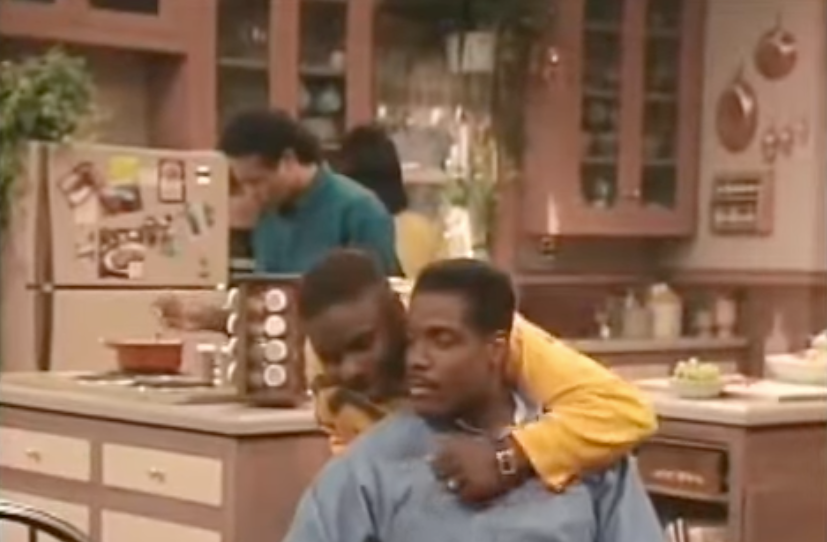
And somewhere along the way, he got a chair.
Not officially. Nobody conducted a ceremony. But there is a place he usually sits, and if somebody else is in it when he arrives, you notice.
An auntie has also started making enough of the side dish he likes because apparently his preferences have entered the family’s meal-planning process.
By then, whatever the two of you are calling it in private is probably the least interesting part to anybody else.
The whole setup has shifted.
I’ve always been interested in the space between what people say and what they show. We put so much weight on declarations: I love you. Will you be my girlfriend? This is my boyfriend. We’re together. Those moments matter. Naming things can bring clarity and intention, and I’m not about to pretend titles don’t matter just because actions do too.
The declaration is simply easier to date.
The evidence is trickier.
When did somebody actually become part of your life? Was it the first date? The first kiss? The first time one of you said I love you?
Or was it earlier, when he remembered something your mother liked and brought it without you asking? Was it when you became official, or when your family started automatically counting him when somebody asked how many plates were needed? Was it when you posted him, or when your auntie stopped asking whether he was coming and started asking what time the two of you would get there?
Love has a way of becoming official in practice before anybody gets around to making it official on paper.
And aunties are excellent administrators.
I use auntie broadly because Black families have always had ways of making kinship bigger than a family tree can explain. Your auntie may be your mother’s sister, but she may also be your father’s cousin, your godmother or the woman who has been your mother’s best friend since they were sixteen and would be genuinely offended if you introduced her as anything other than family. The title is less about genealogy than relationship: she has been around long enough to have both access and opinions.
That kind of access is exactly what makes her dangerous.
She knows your tells.

She can usually tell the difference between somebody you are working very hard to make everyone like and somebody who has become familiar without campaigning for the position. She has seen you perform happiness before. She has also seen what you look like when you forget anybody is watching.
Maybe that’s why aunties are always the first to spot love. They’re not really watching the romance.
They are watching participation.
There is a difference between somebody dating you and somebody slowly learning the life attached to you. The first version knows where you like to eat. The second eventually knows which relative cannot eat what, which child is going to ask for a bite despite having the exact same food, who needs help getting something out of the car and why everybody has been arguing about one particular macaroni and cheese recipe since 2009.
He knows to speak when he comes in.
He knows that “fix your plate” is not always a literal instruction because sometimes somebody has already fixed it for him.
He knows which family story is about to be told because he has heard the opening sentence enough times to recognize it.
He has graduated from guest to participant.
That distinction matters because spectacle can imitate intimacy for a little while. Somebody can send flowers to your job and still remain strangely absent from your actual life. Somebody can plan an immaculate anniversary and have no idea how to move when your week has gone sideways, your mother needs something, somebody forgot an ingredient and six adults are talking at once in a kitchen that is not large enough for six adults.
You can’t really fake participation.
Eventually, the person loving you has to encounter the uncurated version of your world. There are children asking invasive questions. There are cousins who arrive without warning. There is somebody’s mama calling from another room instead of walking ten feet to say what she needs to say. There is the family gathering that supposedly started at three, dinner that was supposed to happen at five and twelve people still standing around the kitchen at nine-thirty despite everybody announcing for two hours that they were about to leave.
Love stops being theoretical when other people are in the room.
That does not mean family gets veto power over your relationship. Aunties can be wrong. Families can be intrusive. Age does not make every opinion wisdom, and some relatives will decide they dislike somebody because he reminds them of a man they knew in 1987 who has absolutely nothing to do with you. Somebody else will decide they love him because he moved one table and called everybody ma’am.
We have to maintain standards.
But there is something worth paying attention to when people who have known you through several versions of yourself begin noticing a version you have not named yet.
Because maybe what they’re noticing isn’t just that you spend a lot of time with somebody.
They are watching you make room.
Making room for somebody looks ordinary from the outside. You start thinking about them without feeling like you’re giving something up. Their preferences start living in your memory. You save them a piece of something without planning to. Something funny happens and you want to tell them first. You’re out somewhere and still making small choices that include them, even when they’re not there.
Then one day they miss something. And the room notices. At first, nobody expected him to be there. Then somebody asks where he is. It’s a small question, but it carries a whole history. He’s been around enough that not being there means something. The family knows where he usually sits.
Of course your auntie noticed.
This is the same woman who can hear two words over the phone and know your I’m fine is not the standard version. The woman who knows you do not actually eat everybody’s potato salad, regardless of what manners require you to say. The woman capable of identifying an argument happening silently across a family function while maintaining an entirely separate conversation about somebody’s baby shower. You really thought you could hide a crush from her?
Come on.
Sometimes I think we describe falling in love as much more private than it really is. The feelings may belong to two people, but eventually the relationship begins touching everything around them. Love changes calendars and Thanksgiving head counts. It puts unfamiliar names into family stories until eventually the names are not unfamiliar anymore. It creates relationships between mothers who otherwise would never have met, cousins who begin texting independently, children who become attached and siblings who start calling somebody for favors without going through you first.
That is one of the things I love most about writing Black romance. Two people can be at the center of a love story without being the only people living inside it. The relationship exists within a whole ecology of family, memory, friendship, obligation, joking, interference, care and people who absolutely did not request permission before developing an opinion.
Somewhere in that world is an auntie watching two lives begin to overlap.
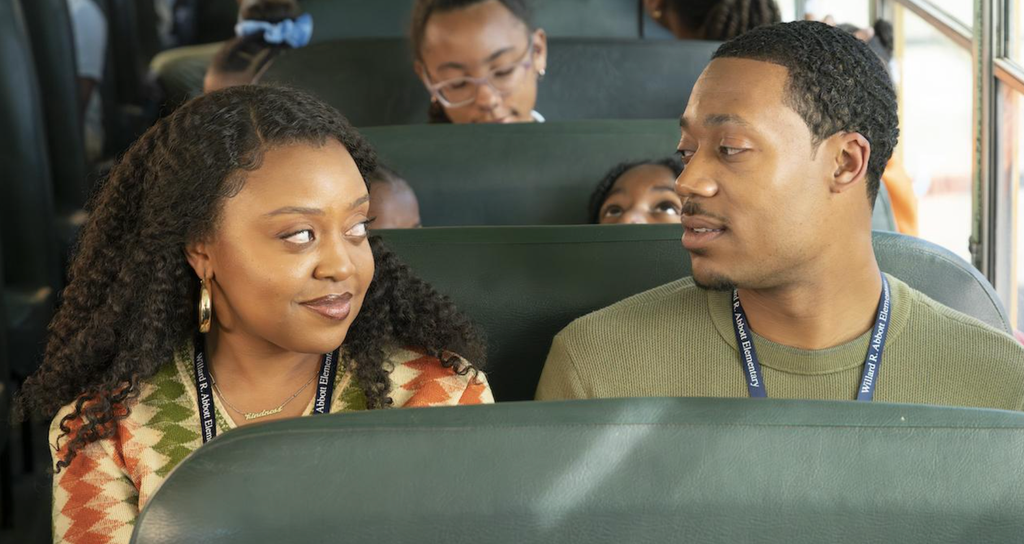
She watches your mother quietly adjust how much food she cooks. She watches your cousin greet him like he has been around longer than he has. She watches him walk into a house and know what needs carrying without standing around waiting to be hosted.
And maybe one afternoon, while doing something completely unrelated, she looks at you and says, “You really like him.”
You roll your eyes.
“He’s my friend.”
“Mhm.”
Nothing is more irritating than an auntie who refuses to argue because she believes time will complete the conversation for her. She does not need your confession yet. The plate is already made.
For all the jokes about aunties being nosy, and some of them really have earned it………there’s something tender about being seen that closely by somebody who loves you. Sometimes what looks like nosiness is just somebody paying attention. Somebody has known you long enough to notice when you start to soften. Not shrink. Not quiet down. Just let your guard down a little.
They notice when another person fits beside you without requiring a performance to remain there. They notice ease. They notice when somebody is learning your world instead of constantly asking you to leave it. They notice that you are not explaining yourself quite as much.
Maybe that is what a good auntie is really recognizing. Not simply you like him. Something closer to: I know you. I know what it looks like when somebody has started mattering to you.
There is a peculiar vulnerability in that kind of witness because adulthood gives us so many opportunities to become people our families did not entirely watch being built. We make friends they do not know the history of. We develop careers they only partly understand. We have private disappointments, strange routines, apartments and communities and entire inner lives that exist outside the houses where people first learned us.
Then we bring somebody home.
And suddenly the people who remember some of our earliest versions are meeting a person who may become part of the next one. Of course they watch. Maybe that is why, by the time you finally make the announcement, your auntie is so unimpressed with the informational portion of it. You come in smiling too hard. You say you have something to tell everybody. Maybe you finally use the title. Maybe there is a ring. Maybe this is simply the first time you are willing to say aloud what the relationship has become. And your auntie looks at you with that deeply irritating expression reserved for people who have been waiting for you to catch up to your own life.
The announcement is new.
The evidence is not.
– Signed Auntie KSJ
Follow KSJ on Instagram at ByKSJackson and read more from them on Substack